454
When geopolitics goes soft and flavour intelligence goes hard
It’s Easter. It’s April Fools. And two of the world’s most recognisable leaders have apparently decided to appear in a room painted in FlavourTrends’ brand colours, holding Easter baskets. We did not commission this. We are choosing to interpret it as an endorsement.
What is not a joke is the data behind the document you’re about to read.
 The Q1 2026 FlavourTrends Intelligence Report is the most complete flavour industry picture we have ever published — our inaugural quarterly edition, replacing the previous monthly format to give us the arc-level view that single months cannot provide. It draws on 81,485 reviewed articles and posts, 785+ primary source articles, and daily signal-tracking across Beverage, Food, Sensory++, Saveur, and Miscellaneous trend categories.
The sensory science findings this quarter are particularly striking. A peer-reviewed study demonstrated that a scientifically engineered soundtrack can measurably improve how rum tastes — higher pitched tones enhancing sweetness, lower pitched tones deepening bitterness and body. Nightly olfactory stimulation during sleep produced a 226% improvement in memory performance over six months in adults aged 60 to 85. Consuming spicy food was shown across four independent studies to significantly increase engagement with high-saturation visual stimuli — a crossmodal finding with direct implications for packaging and marketing. Puratos’ survey of 23,000+ consumers found that 71% now say mouthfeel defines how much they enjoy a product. The Specialty Food Association declared “sensemaxxing” — deliberately engineering layered sensory intensity into smaller portions — the defining snack strategy of 2026. Tastepoint by IFF described the broader shift with precision: “Flavor is evolving into an emotional and sensory language.” Sensory++ was the fastest-growing coverage category of the entire quarter, growing 73% from January to March. The industry is not just tracking flavour anymore. It is tracking perception itself.
The flavour signals are equally decisive. Matcha tripled its coverage signal from January to March — a 215% trajectory confirmed independently by Kerry’s Global Taste Charts, Tastepoint by IFF, and the global matcha market’s own projected growth from $2.46B to $4.5B in a single year. Swicy flavour combinations — spicy-floral alone grew 129% since 2019 — moved from trend to industry framework, with McDonald’s, Wingstop, Hershey, and Takis all making structural commitments in Q1. Pistachio posted a 154% rise in UK confectionery value in twelve months and is now appearing across every category from QSR to fragrance. And GLP-1 weight-loss medications, now taken by approximately 40 million Americans, are actively reshaping how the industry formulates, portions, and positions products — with Givaudan at Expo West 2026 stating plainly: “Food and beverage developers are now focusing on products that deliver stronger taste experiences in smaller portions.”
The report is available in full below. It is free. It is data-heavy. It is, unlike certain world leaders in bunny suits, completely serious.
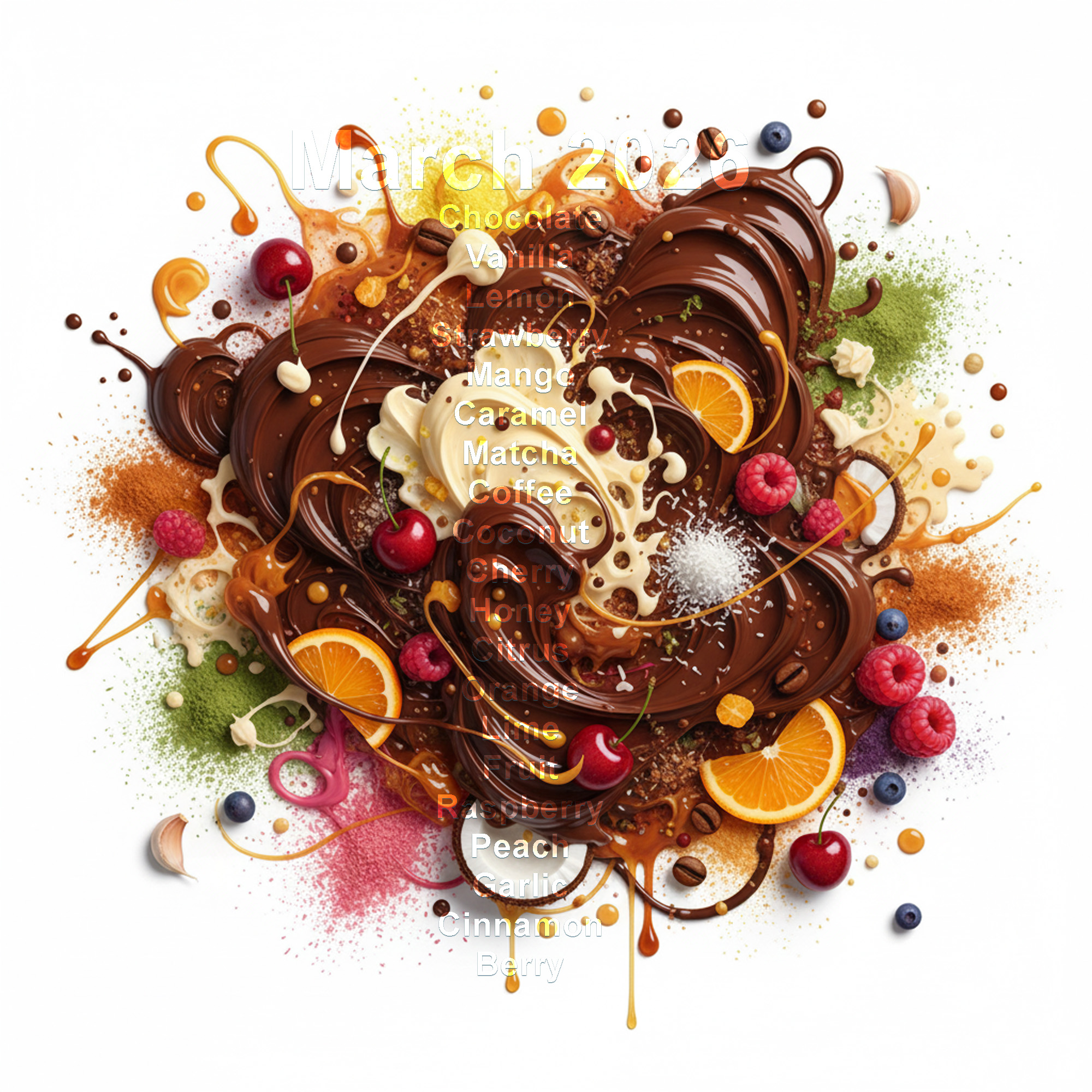
The accompanying images on this page reflect the lighter side of Q1 2026 — a reminder that the world is occasionally absurd, the news cycle is relentless, and sometimes the best thing you can do is publish your intelligence report on April Fools and let the imagery speak for itself.
Happy Easter. Happy April Fools.

Q1-2026 Trends Review

Q1-2026 Sensory Supplement