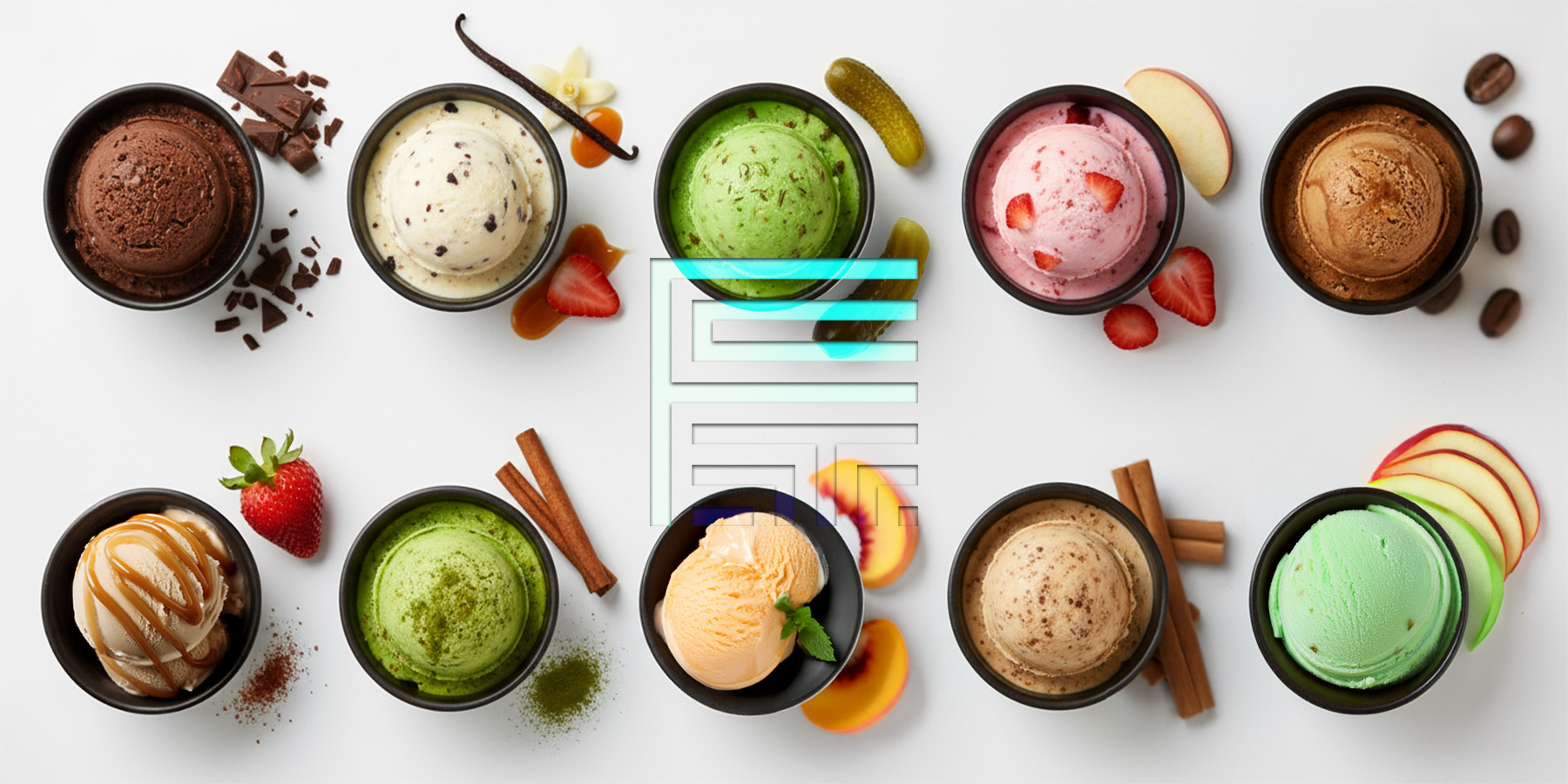
Ice cream isn’t just dessert—it’s a proving ground for flavour culture. September’s data shows the category soaking up everything from nostalgia to outright provocation. As the cover art signals, the month’s ten most‑mentioned flavours span the familiar through the fringe—yes, pickles made the cut—because fat, cold, and churned texture let us push intensity, contrast, and aroma further than most formats without losing craveability.
And we are pushing it. Real products this month ranged from Sunscreen Ice Cream (a cheeky, summer‑scent riff) and Egg & Bacon Ice Cream (breakfast, liquefied and frozen) to Black Licorice “Eclipse” Ice Cream (polarizing, anise‑driven, attention‑grabbing). Regional and cultural crossovers showed real pull—Gulab Jamun Ice Cream, Chai Masala Ice Cream with biscuits & bread pudding, and Spiced Plantain Ice Cream—alongside heat‑chaser novelties like habanero–Thai chili ice cream with ghost‑pepper hot‑sauce swirls. The takeaway is simple: when a brined note like pickle can sit comfortably next to floral, smoky, or fiery profiles, you know the canvas is doing its job. Ice cream is where trends collide, get tempered by dairy, and become something people actually want a second scoop of.
Flavours from September 2025
Main September 2025 Trends
Sweet-Heat (“Swicy”) Revolution
A bold wave of sweet-meets-spicy flavor combinations is captivating palates across categories worldwide. From snacks to sauces to even beverages, consumers are embracing the playful contrast of sugar and spice. Hot honey, chili-infused fruit, and “swicy” (spicy + sweet) pairings are moving into the mainstream. In fact, hot honey has become “one of 2025’s hottest culinary trends (literally!), appearing everywhere from restaurant menus to social media platforms, with #HotHoney garnering over 100M+ views on TikTok”. Major brands are leveraging this trend: Kraft’s new Hot Honey Mac & Cheese and Cheez-It’s Hot Honey crackers both blend mellow sweetness with a kick of heat, while instant noodle makers launch tropical chili flavors like Mango Habanero to entice Gen Z. Even candies and cocktails are exploring sweet-chile notes (e.g. chamoy gummies and spicy margaritas), proving that the sweet-heat craze is a cross-category phenomenon energizing taste buds globally.
Nostalgic Flavors & Pop Culture Comebacks
Nostalgia-inspired tastes are making a powerful comeback, blurring the line between flavor and cultural fandom. Brands are reviving retro favorites and teaming up with entertainment franchises to evoke childhood memories and pop culture excitement. For example, Doritos tapped into ’80s nostalgia by releasing a new Spicy Nacho & Pepper Jack chip flavor in collaboration with Stranger Things, marrying a beloved show with a bold snack. Meanwhile, classic sweet treats are returning in new forms – Kellogg’s brought back Frosted Marshmallow Hot Cocoa Pop-Tarts for a limited run, delivering a “fan-favorite” nostalgic flavor in a seasonal twist. Such limited-edition drops create buzz and urgency, as devotees rush to taste “vault” flavors from the past before they disappear. Whether it’s movie-themed menu items or the resurrection of legacy products, comforting, memory-laden flavors are resonating across food and beverage. This trend underscores how familiar tastes and pop culture tie-ins can offer emotional appeal and instant marketing magic.
Seasonal Flavor Frenzy
Seasonal and holiday flavors have evolved into a global frenzy, with brands introducing ever more creative limited-time tastes tied to the calendar. No longer confined to basic pumpkin spice, autumn and winter menus now feature an array of decadent and playful profiles – and consumers eagerly anticipate these annual flavor traditions. Industry watchers note that shoppers expect fall offerings to blend cozy familiarity with novelty: “Consumers expect autumn menus to deliver indulgent comfort and nostalgic pumpkin-spice familiarity alongside new premium twists”. This is evident in 2025’s fall launches, where major chains rolled out everything from pumpkin spice chai lattes and apple butter desserts to maple shakes and pecan oatmilk cortados. The flavor playbook for seasons now extends beyond autumn – summer sees tropical throwbacks (one gin RTD touted a yuzu-pineapple cocktail as “summer in a tin” nostalgia), and spring brings floral and fruity infusions. Across food and beverage, limited-time seasonal flavors create excitement and tradition, driving social media buzz and repeat visits as consumers chase the taste of the moment each season.
Global Palate Expansion & Fusion Flavors
In 2025, the world’s pantry is truly everyone’s pantry – global flavors are flowing into every category, creating inventive fusions and broadening mainstream palates. Ingredients once seen as niche or ethnic are now appearing in everything from snacks to cocktails. For example, bartenders are mixing spices and condiments from international cuisines into drinks: “Flavors and ingredients common in Indian food, such as fenugreek, ginger, limes, chiles and chaat masala, are growing in popularity in cocktails”. Likewise, chefs and brands are blending culinary traditions – consider a Denver BBQ restaurant that smokes meat Texas-style but marinates in Oaxacan chile al pastor, giving Americans a taste of Mexico in a familiar format. Asian fermented sauces like gochujang and kimchi have crossed over into condiments and even comfort foods worldwide, while Filipino ube (purple yam) has made its way into lattes and desserts for a colorful, nostalgic twist. This cross-pollination reflects consumers’ adventurous appetites – they seek cultural exploration through flavor, whether it’s Korean snacks in Western supermarkets or Middle Eastern spices in plant-based protein bars. Global fusion is now a mainstream expectation, and authentic provenance paired with creative adaptation is key to capturing these cosmopolitan taste buds.
Functional Wellness Flavors
As consumers increasingly view food and drink as tools for wellness, functional flavors are surging across categories. There’s a boom in ingredients that promise benefits like gut health, energy, stress relief, or immunity – all delivered in tasty, convenient formats. Probiotic tonics, adaptogenic coffees and teas, collagen-infused snacks, and nootropic sodas are just a few examples of this trend. In fact, “gut health remains the number one driver of innovation in the natural health sector” according to industry experts, reflecting huge demand for fermented and fiber-rich flavors that support digestion. Brands are responding with kombucha-flavored candies, prebiotic plant-based sodas, and herbal elixirs that blur the line between supplement and treat. For instance, new beverage launches include everything from protein-rich matcha drinks to blackberry-violet probiotic sparklers, illustrating consumers’ desire for botanical wellness in a delicious form. Even indulgent categories are getting a functional twist (think adaptogen-infused chocolates or calming chamomile ice creams). The key is balancing efficacy with taste: successful products pair healthful ingredients (turmeric, mushroom extracts, CBD, ginseng, etc.) with appealing flavors so that self-care feels like an indulgence rather than a chore.
Plant-Based & Alternative Ingredients Go Mainstream
The plant-based movement continues to reshape global taste, as dairy alternatives and novel proteins bring new flavors and textures to everyday products. What started with soy and almond milk has exploded into a wide array of alt-dairy (oat, coconut, pea, etc.) and meatless proteins (peas, mushrooms, jackfruit, even insect and lab-grown proteins) – and these bases are now cross-category staples. In coffee culture, non-dairy milks have become so popular that oat milk is often the default, with many cafés dropping the extra charge for plant milk to meet demand. This normalization is opening doors for creative flavor innovation: one new product, for example, is an ube (purple yam) vanilla latte made with oat milk, blending a traditional Filipino dessert flavor with modern dairy-free coffee culture. The drink is “presented as a dairy-free, decaf option… offering a creamy, caffeine-free indulgence”, highlighting how plant-based choices can be both healthy and decadent. Beyond drinks, brands are introducing plant-based cheeses and meats that incorporate robust seasonings to appeal to mainstream palates, and even exploring novel sources like algae or crickets as protein – often pairing these with familiar or bold flavors to overcome skepticism. With one food expo showcasing everything from vegan cheese to seasoned grasshoppers under one roof, it’s clear that alternative ingredients are no longer alternative – they’re a frontier for flavor creativity, requiring clever masking (for bitterness or earthiness) and celebration of unique tastes. The result is a broader spectrum of flavors, as consumers embrace plant-based and planet-friendly eating without sacrificing taste.
Fermentation and Umami Explosion
Fermented flavors and deep umami notes are exploding in popularity, adding complexity and heritage to foods and beverages around the world. Age-old fermentation-based ingredients like miso, soy sauce, kimchi, fish sauce, and gochujang are no longer confined to their traditional dishes – they’re being used creatively to punch up sauces, snacks, and even cocktails with savory depth. “The trend has really taken off with pickled and fermented flavor profiles … kimchi … layers sourness, spiciness and umami,” one report observes, noting how these profiles satisfy consumers’ desire for bold, layered tastes. In Asia, a “Miso & Beyond” movement highlights how Japanese and Korean fermented staples are gaining international traction as authentic flavor carriers. We see this in Western markets too: chefs are topping burgers with kimchi, craft brewers are playing with lacto-fermented fruit in sours, and even pizza chains are testing umami-rich sauces like black garlic miso blends. The probiotic wellness angle also fuels this trend – kombucha drinks, yogurt snacks, and fermented hot sauces are valued for both taste and gut benefits. As umami becomes a sought-after taste (sometimes called the “fifth taste”), manufacturers are leveraging natural ferment concentrates, mushroom extracts, and cultured seasonings to create that savory satisfaction. The result is a global umami boom: whether it’s a bowl of ramen, a plant-based burger, or a cocktail rim, expect a touch of tangy, funky fermented flavor to elevate it in 2025.
Botanical and Floral Notes Bloom
Delicate botanical, herbal, and floral flavors are blooming across beverages and confections, bringing a refined, aromatic twist to mainstream products. Ingredients like lavender, hibiscus, rose, elderflower, and herbs (basil, mint, rosemary) are being used to add complexity and a wellness halo to drinks and treats. In cafe menus and craft cocktails, there’s a noticeable uptick in flower-forward and botanical infusions – think violet-infused sparkling tonics, jasmine teas, or gin with rose and cucumber notes. According to menu data, “trendy flavors for drinks in 2025” include more floral and fruit-forward notes – for example, strawberry-matcha lattes or blueberry-syrup sodas – and even unexpected combos like “dirty sodas” (soft drinks mixed with cream and syrups) are surging in popularity (up +320% year-over-year), alongside matcha lattes (+71%). These numbers reflect how younger consumers seek out novel, Instagrammable flavor experiences beyond the traditional vanilla or cola. Florals in particular offer a light, fragrant profile that can make a beverage or dessert feel artisanal and experiential. Limited-edition launches are capitalizing on this: e.g. probiotic drinks inspired by classic cocktails come with botanical twists and edible flowers, merging visual appeal with flavor. Overall, the botanical trend speaks to a desire for both sensory novelty and natural ingredients – products that are lower in artificial sweetness but high in aromatic character, often positioned as premium or better-for-you indulgences.
Multi-Sensory Flavor Experiences
Flavor in 2025 isn’t just about taste – it’s about the total sensory experience. Brands and innovators are increasingly crafting experiences that engage smell, sight, sound, and touch alongside taste, recognizing that a memorable flavor can be amplified through multiple senses. This trend is evident in pop-up events, retail spaces, and product launches that blur the boundaries between food, art, and culture. For example, cosmetics brand Lush opened a Café Gourmand pop-up in New York, where visitors explore edible-inspired fragrances (like Pumpkin Spice perfume) while sipping product-themed lattes, effectively merging gourmand scent and flavor. The concept, as the brand notes, is “reflecting consumer appetite for multisensory, experiential, and eco-conscious retail activations”. Similarly, an exhibition in Italy recently invited people to discover how sound can enhance the perception of flavor, demonstrating that music and audio cues can make foods taste sweeter or more bitter. Restaurants and bars are also joining in: some offer immersive dining with atmospheric lighting, aromatized rooms, or textured dishware that all influence flavor perception. Even in product design, we see multi-sensory cues – think of packaging that releases a scent when opened, or color-changing drinks that signal flavor notes. These experiential flavor innovations recognize that consumers (especially Gen Z) crave interactive and immersive experiences. By engaging multiple senses, brands create deeper emotional connections with their flavors – turning a taste into a full-body memory, and making the act of tasting a form of entertainment and personal expression.
Each of these trends is shaping the flavor and product innovation landscape of 2025, often overlapping with one another – from a spicy, functional, low-sugar kombucha to a nostalgic, premium craft soda. Together they illustrate a food and beverage scene that is more adventurous, health-conscious, and experience-driven than ever before, while still clinging lovingly to the comfort of the past. Sources in the industry confirm these movements, painting a comprehensive picture of where our palates are headed. The top 10 trends above reflect not just what people are eating and drinking, but why – seeking balance between indulgence and wellness, novelty and tradition, convenience and connection, all on the plate. Each trend is backed by examples and insights from the latest reports and articles (September 2025), ensuring a fully evidence-based snapshot of the current food zeitgeist.
Flavours, Foods, Beverages, Creations & Descriptors of September 2025
Flavours from September 2025
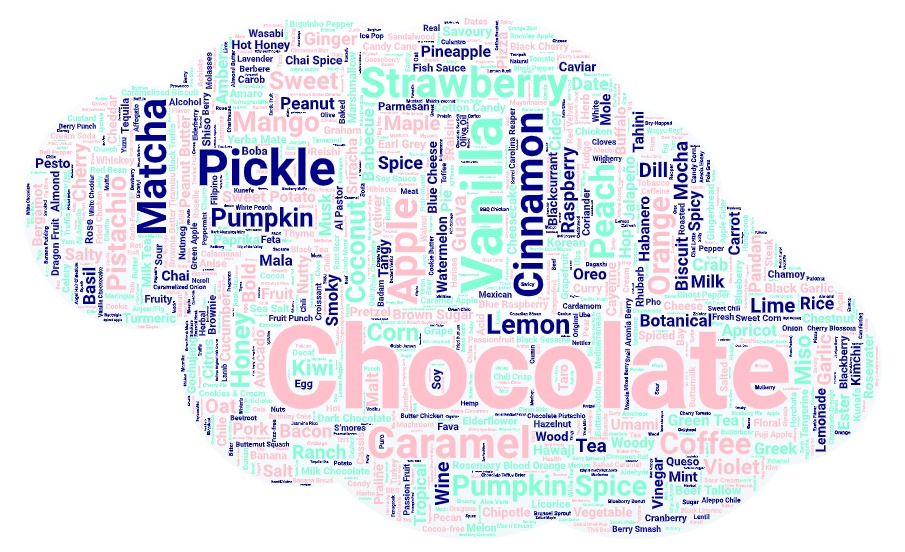
Comfort leads the story—chocolate, vanilla, caramel, strawberry, apple, cinnamon, matcha—while peach, coffee, orange, pumpkin spice, mango, coconut, and lemon carry the daily lift; the real momentum comes from disruptors like pickle, ube, cardamom, yuzu, tamarind, chili, gochujang, miso, kimchi, calamansi, and chili crisp, pushing savory heat, bright citrus, and umami into the mainstream. The vibe is nostalgic and premium yet unapologetically bold and functional; seasonal, indulgent, and creamy set the texture, with sustainable now baseline. Spicy, smoky, and savory cues feel normalized; plant‑based, multi‑sensory, visual, and social power the launch engine; limited‑edition and experiential drop mechanics create urgency; playful, viral, wellness‑minded, natural, authentic, fresh, and innovative keep trust and talkability. Net: start cozy, finish with global bite, and make it camera‑ready.